About Philippe Borremans
Helping organisations
prepare together
before crises demand it.
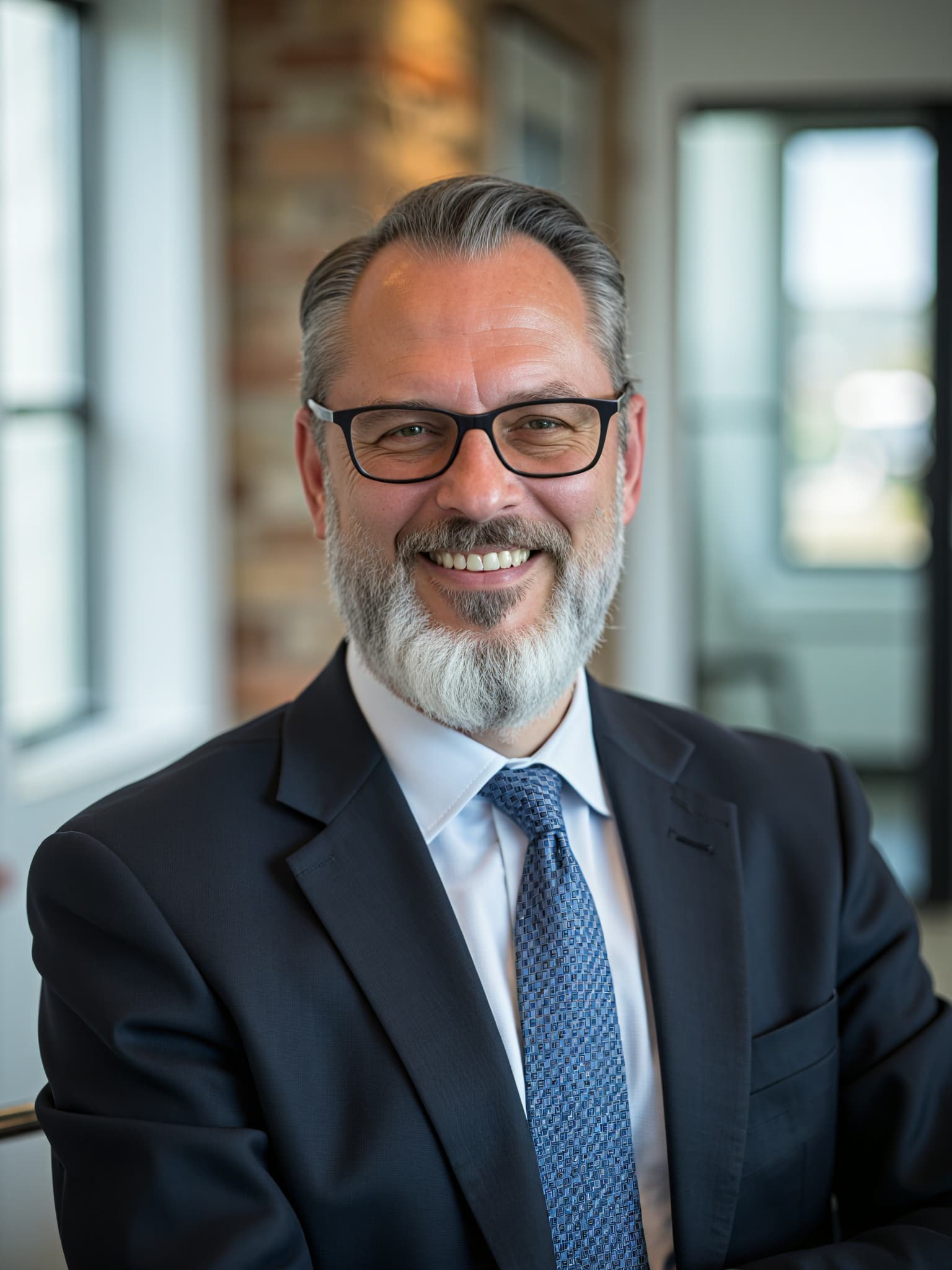
Philippe Borremans is an independent adviser specialising in crisis communication and collaborative preparedness. For more than twenty-five years he has worked across business, government, international organisations and emergency operations — helping them understand one another and work together before crises occur.
Why I Do This Work
The experience that
changed everything.
In 2015, I worked across several West African countries following the Ebola epidemic. My role was to help strengthen emergency communication capacity by designing and delivering training programmes, workshops and crisis simulations for public information officers and emergency operations centre teams.
More than 300 professionals from different countries participated.
The strongest responses were not always those with the most resources. They were the responses where governments, health authorities, communities, humanitarian organisations and other partners understood one another and worked together.
It became clear that no organisation manages a major crisis alone.
Since then, my work has focused on helping organisations strengthen those relationships before the next crisis occurs.
What I Have Learned
Communication rarely fails
for the reasons people assume.
Understanding each other
Organisations that struggle to communicate during a crisis often struggle because they do not understand one another well enough. Different cultures, different priorities, different ways of working.
Involving the right people
Communication fails when the people who matter — communities, partners, authorities — are brought in too late. Preparedness means involving them before they are needed.
Coordinating decisions
Effective communication depends on effective decision-making. When decision-making breaks down under pressure, communication follows. Preparedness strengthens both.
Understanding audiences
Different audiences experience risk differently. Effective communication begins with understanding those differences — not with crafting messages.
Working across boundaries
Major crises cross organisational, sectoral and societal boundaries. Preparedness must do the same. Organisations that prepare in isolation are rarely ready for what actually happens.
Relationships before plans
Preparedness is much more than plans, templates and procedures. It is about strengthening relationships before they are tested. Communication supports that process. It does not replace it.
Working Across Borders and Cultures
There is no universal
model for crisis communication.
For more than twenty-five years, my work has taken me across Europe, West and North Africa, the Middle East, the Caribbean, North America and Asia.
Every assignment has reinforced the same lesson. Political systems differ. Cultures differ. Media environments differ. Levels of institutional trust differ. Communities experience risk differently.
Effective communication begins with understanding those differences.
Whether advising a multinational company, supporting a government ministry or working alongside an international organisation, I begin by understanding the context before recommending solutions. Preparedness may involve global challenges, but every response is shaped by local realities.
Experience Across Different Worlds
Four environments.
One consistent approach.
Rather than a chronological career history, what matters is the range of environments in which this work has been done — and what each has contributed to the understanding of how organisations prepare and communicate.
Business
+Supporting multinational organisations managing operational, reputational and leadership challenges. Clients have included organisations across energy, finance, consumer goods, technology, healthcare and professional services.
Governments & Public Institutions
+Supporting preparedness, communication capability and leadership across national and regional government bodies, public health authorities, and regulatory institutions.
International Organisations
+Working with WHO, UN agencies, European institutions, public health programmes and development organisations on communication strategy, capacity-building and emergency preparedness.
Emergency Operations
+Deployed to support communication during public health and humanitarian emergencies as part of international emergency consultant rosters. These experiences have shaped a deep understanding of what communication under pressure actually requires.
How I Work
Every engagement
begins by listening.
No two organisations face exactly the same challenges. The risks they manage, the communities and partners they work with, the cultures they operate in, and the pressures they face are all different. That is why I work directly with clients and ask questions before proposing solutions.
My advice is practical, realistic and tailored to the organisation. I am not interested in producing frameworks that look impressive on paper but are difficult to use under pressure.
I believe preparedness should improve decision-making, collaboration and communication — not simply produce better documents.
That means working with the people who will actually be responsible for communicating during a crisis — not just those who commission the work. It means testing plans against realistic scenarios. And it means being honest when something is not working.
How I Work
Direct access.
The right expertise when needed.
I work directly with every client and remain closely involved throughout each engagement. When an assignment requires additional expertise or capacity, I bring in trusted specialists with experience relevant to the work.
Explore how I work with clients →A Career Shaped by Experience
Significant
milestones.
International corporate advisory
Began advising multinational organisations on crisis communication, reputation risk, and community engagement across Europe and beyond.
West Africa Ebola capacity-building
Designed and delivered emergency communication training for more than 300 public information officers and emergency operations centre teams across several West African countries.
WHO and UN assignments
Supported the World Health Organization and UN agencies on public health communication, infodemic management, and emergency preparedness programmes.
Emergency consultant roster deployments
Deployed to support communication during public health and humanitarian emergencies as part of international emergency consultant rosters.
Mastering Crisis Communication with ChatGPT
Published a practical guide on integrating AI tools into crisis communication workflows, drawing on field experience and emerging research.
CrisisCon
Launched CrisisCon, a practitioner-led initiative bringing together professionals from across sectors to share experience and strengthen collaborative preparedness.
AI and crisis communication initiatives
Continuing to develop frameworks and training programmes that help organisations use AI responsibly in communication and preparedness contexts.
AI and Crisis Communication
Using AI responsibly
in communication and preparedness.
AI tools are changing how organisations communicate — and how they prepare. Philippe has been exploring these changes since 2022, developing practical frameworks for integrating AI responsibly into crisis communication workflows.
This includes work on AI-assisted message development, monitoring and analysis, and the governance questions organisations need to address before deploying AI in high-stakes communication contexts.
AI Infrastructure Statement →How I Approach This Work
Three principles that have
shaped how I work.
Communication is part of the work, not a layer on top of it.
Organisations often treat communication as something that happens after decisions are made — a press release, a statement, a social media post. In my experience, that approach consistently fails under pressure. Communication needs to be integrated into how organisations prepare, decide and act. That means working with operational teams, not alongside them.
Preparedness is collaborative by nature.
A crisis rarely stays within one organisation's boundaries. It involves regulators, emergency services, community groups, partner organisations, journalists, health professionals and many others — each with different information needs, different levels of trust and different expectations. Preparing in isolation means being surprised by the people you most need to work with.
Trust is an outcome, not a product.
You cannot manufacture trust through messaging. Trust is the result of consistent conduct, demonstrated competence, honest communication and relationships built before a crisis begins. My work focuses on helping organisations earn trust through what they do, not just what they say.
The Manifesto
Prepared Together
A manifesto for crisis, risk and emergency communication. By Philippe Borremans.
Let's Start a Conversation
Every engagement
begins with a conversation.
Whether you are reviewing your crisis preparedness, strengthening communication capability, designing an exercise or exploring new ways to work across organisational boundaries, I would be pleased to discuss your objectives.